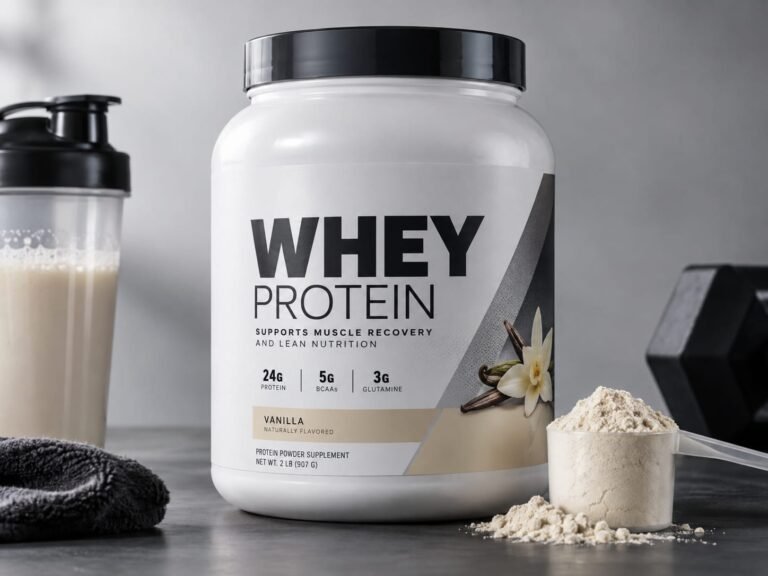
What is whey protein?in depthWhey protein is a high-quality protein obtained from milk. It is especially popular because it contains all nine essential amino acids, is digested relatively quickly, and is particularly rich in leucine, an amino acid that helps stimulate muscle-protein synthesis.1. Where whey comes fromMilk contains roughly two major groups of protein:Casein: about 80%Whey: about 20%When milk is used to make cheese or paneer, it separates into solid curds and a watery liquid. That liquid contains whey proteins. Manufacturers filter and purify this liquid, remove much of the water, fat and lactose, and dry it into powder.So whey protein isn’t an artificial protein created in a laboratory. It is essentially a concentrated fraction of milk protein.2. What whey protein actually containsWhey contains several individual proteins, including beta-lactoglobulin, alpha-lactalbumin, immunoglobulins and serum albumin.Nutritionally, however, what matters most is its amino-acid profile.Whey contains all the essential amino acids, meaning amino acids your body cannot manufacture adequately and therefore must obtain from food.It is particularly rich in the branched-chain amino acids, or BCAAs:Leucine, isoleucine and valine.Leucine is especially important because it acts partly as a biochemical signal telling muscle cells that amino acids are available for building new protein.A typical serving providing around 25 g of whey protein may contain roughly 2.5–3 g of leucine, though it varies between products.3. What happens after you drink wheySuppose you drink a whey shake.Your digestive system breaks the whey proteins into peptides and amino acids. These amino acids are absorbed through your intestine into the bloodstream.Blood amino-acid levels rise relatively quickly because whey is considered a fast-digesting protein.Muscle cells can then use these amino acids to repair or build new proteins.Resistance training itself stimulates muscle-protein synthesis. Eating protein provides the raw materials needed for that process.This is why the combination of:resistance exercise + sufficient protein + adequate calories + recoveryis considerably more important than whey protein by itself.Whey doesn’t somehow create muscle automatically.4. The three main types of wheyTypeTypical protein concentrationLactose/fatMain featureWhey concentrate (WPC)~70–80%SomeUsually cheapestWhey isolate (WPI)~85–95%Very littleMore purifiedWhey hydrolysate (WPH)VariesUsually lowPartially pre-digestedWhey concentrate is the most common. A 30 g scoop might provide around 22–24 g protein, with small amounts of carbohydrates and fat.Whey isolate undergoes additional filtration. Most fat and lactose are removed. A 30 g scoop might therefore provide around 25–27 g protein.Isolate can be useful for people who are mildly lactose intolerant or who simply want a higher percentage of protein.Hydrolysed whey has been partially broken into smaller protein fragments called peptides. It may digest slightly faster, but for most healthy people the practical muscle-building advantage over ordinary whey is small.It is also usually more expensive.5. Why whey is considered such a good proteinProtein quality depends partly on whether it provides enough essential amino acids and whether those amino acids are well absorbed.Whey performs extremely well on these measures.It is therefore considered one of the highest-quality dietary proteins available.That doesn’t mean whey is necessary. Eggs, milk, yoghurt, paneer, chicken, fish, meat, soy and combinations of plant proteins can also supply excellent protein.The advantage of whey is mainly convenience.Drinking 25 g of protein can be much easier than preparing another meal.6. Whey protein and muscle growthIf someone performs resistance training, consuming adequate protein makes it easier to build and preserve muscle.But the important variable is usually total daily protein intake, rather than whether that protein came specifically from whey.For someone interested in gaining or maintaining muscle, a commonly used evidence-based range is approximately:1.6 g protein per kg body weight per daywith something like 1.4–2.0 g/kg/day often being reasonable for active people depending on goals, calorie intake and training.For example, a 70 kg person aiming for around 1.6 g/kg would consume about:70 × 1.6 = 112 g protein/day.That could come from ordinary foods alone.Whey simply helps fill whatever gap remains.7. You don’t need huge quantitiesA single serving is normally around 20–30 g of actual protein.There isn’t much reason for an average person to drink 70–100 g of whey protein in one sitting just because they want more muscle.Muscle growth depends on your protein intake across the entire day and your training stimulus.A useful pattern is spreading protein across several meals rather than consuming nearly everything at once.8. Do you need whey immediately after exercise?You’ve probably heard of the “30-minute anabolic window.”The idea has been exaggerated.You do not need to rush into the locker room and drink whey within exactly 30 minutes.Muscle remains more responsive to protein for many hours after resistance training.If you trained several hours after your previous meal, having some protein reasonably soon afterwards makes sense.But if you ate a protein-rich meal shortly before exercising, there is much less urgency.Think in terms of daily protein and meals surrounding your workout, rather than a stopwatch.9. Whey and weight lossProtein can help during weight loss because it tends to increase satiety and helps preserve muscle while calories are restricted.However, whey itself doesn’t burn fat.Calories still matter.For example:A whey shake containing 130 calories is helpful if it replaces a 400-calorie snack.But adding that shake on top of everything you already eat adds calories.So whey can support weight management, but it isn’t inherently a fat-loss supplement.10. Whey versus ordinary foodThink of whey as food in powdered form, not as a magical bodybuilding substance.Consider:250–300 ml milk might provide ~8–10 g protein.100 g paneer might provide roughly ~15–20 g, depending on the product.Several eggs may provide around 18–25 g.A whey shake can provide ~25 g protein with very little preparation.That is why athletes use it.The nutritional advantage isn’t magic—it’s protein density and convenience.11. Whey versus caseinWhey and casein come from the same source: milk.The main difference is digestion.Whey tends to digest relatively quickly and produces a fairly rapid rise in blood amino acids.Casein forms a slower-digesting structure in the stomach and releases amino acids more gradually.Neither one is universally superior.Whey is convenient after exercise or during the day.Casein-rich foods such as milk, yoghurt and cottage cheese/paneer provide slower digestion and can keep amino acids available for longer.A normal diet can contain both.12. Whey versus plant proteinPlant proteins can absolutely support muscle growth.But individual plant proteins sometimes contain smaller amounts of certain essential amino acids or slightly less leucine.For example, pea, rice and soy proteins can all work well, especially when total intake is adequate.Soy is particularly high quality.Someone using plant protein may sometimes benefit from consuming a slightly larger serving—for example 30 g rather than 20–25 g—to achieve a similar amount of essential amino acids.Vegans obviously wouldn’t use whey because whey comes from milk.13. Whey protein and lactose intoleranceThis is an important distinction.Milk allergy and lactose intolerance aren’t the same thing.Lactose intolerance involves difficulty digesting the milk sugar lactose.Whey concentrate may contain enough lactose to cause gas, bloating or diarrhoea in sensitive people.Whey isolate contains much less lactose and is often better tolerated.A genuine milk-protein allergy, however, can involve reactions to whey proteins themselves. Someone with a milk allergy should not simply switch from concentrate to isolate without medical advice.14. Why whey sometimes causes bloatingIf someone experiences bloating after whey, several things could be responsible:lactose, consuming a large shake too quickly, artificial sweeteners or sugar alcohols, gums/thickeners added to the powder, drinking it with a large quantity of milk, or simply consuming more protein/calories than their digestive system is accustomed to.Changing from concentrate to isolate sometimes solves the problem.15. Does whey damage the kidneys?This is one of the most common misconceptions.For healthy people with normal kidney function, ordinary high-protein diets and whey protein aren’t generally considered to inherently “damage the kidneys” simply because they contain protein.Kidneys do have to process nitrogen-containing waste products produced during protein metabolism, but increased kidney workload isn’t automatically equivalent to kidney damage.The situation is different for someone with chronic kidney disease or impaired kidney function. Protein intake may need to be controlled depending on the condition and stage.So someone with known kidney disease should discuss protein intake with their doctor or dietitian rather than copying bodybuilding protein recommendations.16. Is whey harmful to the liver?Normal protein intake isn’t generally considered damaging to a healthy liver.Again, established liver disease changes the situation because dietary needs can become much more complicated.Whey shouldn’t be regarded as a treatment for liver disease, either.17. Whey and acneSome people report more acne after consuming whey or large quantities of dairy.There is some scientific interest in possible connections between dairy, insulin/IGF-1 signalling and acne, but individual responses vary considerably.If someone notices a consistent pattern—whey → acne worsening → stopping whey → improvement—trying a period without it and using another protein source may be reasonable.18. Is whey a steroid?No.This misconception is surprisingly common.Whey protein is not a steroid, hormone or anabolic drug.Proteins and amino acids are normal components of food.Eating whey is conceptually much closer to drinking concentrated milk protein than taking anabolic steroids.19. Is whey “natural”?The word natural is vague.Whey originates naturally from milk but undergoes industrial processing—filtration, pasteurisation, drying and often flavouring.So a plain whey isolate isn’t “whole food,” but that doesn’t make it inherently unhealthy.Processing itself isn’t automatically harmful.What matters more is what’s in the product.20. What should you look for when buying whey?The ingredient label tells you a lot.Ideally, the first ingredient should say something like:Whey protein concentrate
or
Whey protein isolate.A 30–35 g scoop providing only 15 g of protein isn’t particularly protein-dense.Something providing around 22–27 g of protein per ~30 g serving is more typical.You should also look at added sugar, total calories and unnecessary ingredient mixtures.In India particularly, buying from a reputable manufacturer and trusted seller matters because protein powders are occasionally adulterated or inaccurately labelled. Products with credible third-party testing are preferable.21. Whey isn’t necessary for fitnessThis is perhaps the most important point.Imagine someone needs 110 g protein/day.If their normal meals provide:Breakfast: 25 g
Lunch: 30 g
Snack: 15 g
Dinner: 40 gTotal = 110 g.That person gains essentially no special advantage simply by adding whey.Now imagine another person’s diet provides only 80 g.A scoop containing 25 g brings them to:80 + 25 = 105 g.That’s where whey becomes extremely convenient.22. The simplest way to understand wheyThink about whey protein this way:Milk → whey extracted → filtered → dried into powder → concentrated source of essential amino acids.Its main benefits are that it is:high-quality, protein-dense, quickly digested, rich in leucine, convenient and relatively easy to consume.Its biggest misconception is that it’s some special muscle-building substance. It isn’t.Training provides the signal to build muscle.
Protein provides the building materials.
Calories and nutrients provide energy.
Sleep and recovery allow adaptation.
Whey is simply one convenient way of supplying the protein.